Points
Vertex Astrology Calculator
Locate the Vertex degree with our interactive guide. Learn how practitioners use this calculated point for encounters, timing, and destiny-flavored themes.
Free calculator
Vertex Astrology Calculator
Enter your birth details to find your Vertex sign and degree.
What this points calculator is for
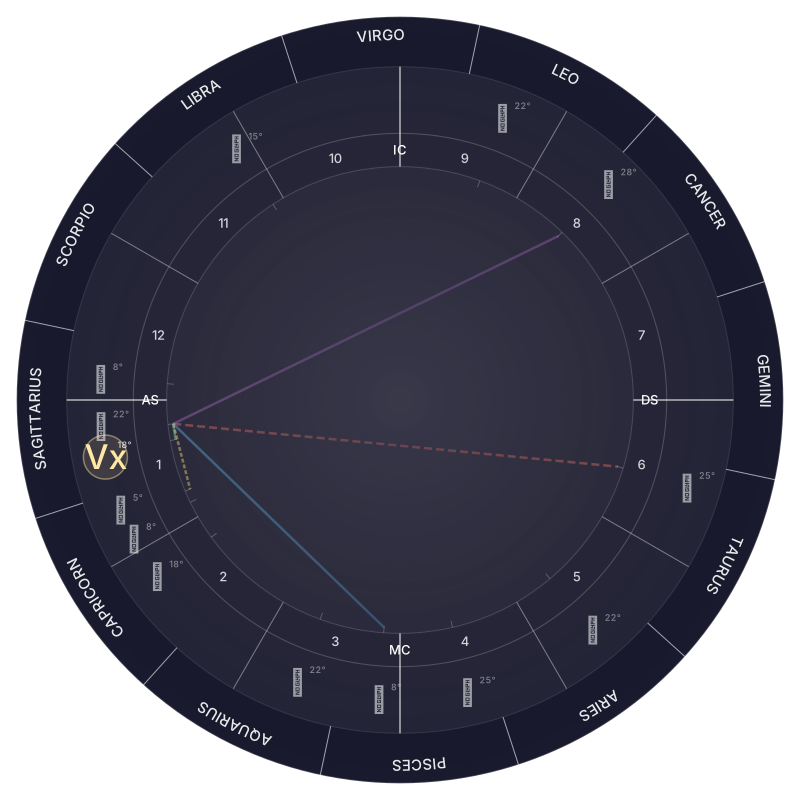
A Vertex Astrology Calculator locates the Vertex degree in your natal chart. Modern astrologers who use the point often associate it with meetings, openings, and chapters that feel arranged by timing rather than sheer hustle. Not every tradition emphasizes the Vertex; this page exists for readers who specifically seek it.
Vertex Astrology and plain “Vertex” queries share one page. We do not split phrasing variants. Points such as Midheaven remain out of scope here so keyword merge rules stay clean.
Because the Vertex needs precise time and place, treat unknown birth times as a stop sign. Guessing produces confident nonsense. Verify records before building relationship theories on a shaky angle.
Reading Vertex themes carefully
Note sign and house first. Then check whether personal planets or nodes aspect the Vertex tightly. Some astrologers watch transits and progressions to the Vertex for timing stories. Others prioritize synastry contacts for relationship narratives.
Hold interpretations lightly. “Fated” language can become unhealthy if it excuses poor boundaries. Use the symbolism as a prompt for awareness, not as permission to ignore consent or practical red flags.
Compare with north node astrology when growth direction and encounter themes overlap. Compare with lunar return charts when a particular month seems unusually meeting-heavy.
Misconceptions
Myth: every important person hits your Vertex. Charts contain many contact points; life is larger than one degree.
Myth: Vertex replaces free will. Even strongly timed chapters include choices about participation and meaning.
Myth: you can study Vertex without a natal chart. House context and aspects are what make the degree intelligible.
Keep exploring Points
Continue to the Part of Fortune Calculator for lot-based symbolism, and to the birth chart for the full wheel. Both Points pillars should remain cross-linked from the calculators hub under a clear Points heading.
Using the Vertex without fatalistic traps
When your calculator result is ready, list notable encounters that changed your path and see whether timing anecdotes cluster—without forcing every friendship onto the point. Correlation hunting can become superstition if uncritical.
In synastry, Vertex contacts are one data layer among many. Chemistry, values, and behavior still decide whether a meeting becomes a healthy chapter. Do not outsource consent to a calculated degree.
Timing techniques that activate the Vertex may coincide with chapters that feel larger than your planner. Pair those notes with lunar return months and nodal seasons for a multi-scale view rather than a single-point obsession.
Skepticism is welcome. If the Vertex does not speak in your experience after honest tracking, you can deprioritize it and still benefit from other Points and planetary tools. Astrology menus should be optional, not mandatory.
Keep this page linked with Part of Fortune and the natal chart so Points category crawlers and humans can move laterally. Distinct formulas deserve distinct URLs—and enough unique explanation to justify ranking independently.
Tracking encounters with clearer research hygiene
Start a private meeting log—dates, context, outcome—before declaring cosmic rules for your relationships. Accurate birth time and place come first; without angles, Vertex math is theater. Keep timezone notes for travel births so later reviews stay honest.
When you recommend this guide to peers, describe it as an optional points primer about encounter symbolism, not as proof that every important person must contact a single degree. Consent and values still outrank any calculated point.
For lot-based symbolism, open Part of Fortune. For growth direction and monthly weather, use north node astrology and a lunar return chart. For house and aspect context, return to the natal chart instead of stretching this article into a full sky course.
Browse /calculators whenever you want the Points category map in one place. This URL stays narrow on Vertex hygiene so neighboring pages can cover different formulas without thin duplicates.
Success looks like better observation, not tighter superstition: clearer records, lighter “fate” language, safer boundaries when a chapter feels charged. Visibility in search follows usefulness; usefulness here means timed awareness without fatalistic traps.
Vertex research habits for serious students
Keep a private encounter log with dates, contexts, and outcomes for a year before declaring Vertex rules for your life. Sample size matters even in symbolic work.
Prefer primary data—your calendar—over recycled forum legends. Folklore can inspire hypotheses; it should not replace observation.
Technical hygiene includes timezone awareness for travel births and hospital timezone quirks. Bad angles scramble Vertex math quietly.
If a meeting felt fated and later proved harmful, revise the narrative. Fate language must never excuse staying unsafe.
Study Part of Fortune in parallel if you want multiple calculated points, but avoid stacking so many sensitive points that every degree becomes “the reason.” Parsimony keeps charts readable.
Closing notes for Vertex seekers
If you teach astrology, present the Vertex as optional advanced material with clear uncertainty labels. Students trust teachers who admit which tools are contested.
Software differences in house systems can shift house overlays even when the Vertex degree itself is stable enough. Document the house system you used in any case study.
Travel relocational charts change angles and can move Vertex house topics. Treat relocated experiments as separate from the natal baseline unless you are intentionally studying relocation.
Frequently asked questions
What is the Vertex in astrology?
The Vertex is a calculated western-hemisphere point used in some modern schools to describe fateful encounters or events that feel larger than everyday will.
Do I need birth time for the Vertex?
Yes. The Vertex depends on birth time and place. Without accurate angles from a verified birth record, the calculated point is unreliable for interpretation.
Is Vertex the same as Part of Fortune?
No. They are different calculated points with different formulas and interpretive traditions. This site keeps them on separate pillar pages.
Related calculators
Continue with tools that pair well with vertex astrology calculator.
- Part of FortuneLocate your fortuna lot for ease, embodiment, and flow themes.
- natal chartMap your free birth chart and natal chart from birth date, time, and place.
- north node astrologyLocate your north node and explore growth themes without destiny hype.
- lunar return chartCast a monthly Moon map when the Moon returns to its natal place.