Core calculators
South Node Calculator
Find your south node with our South Node Calculator. Explore familiar skills, habits, and release themes without fatalistic karma talk.
Free calculator
South Node Calculator
Enter your birth details to find your South Node sign and placement.
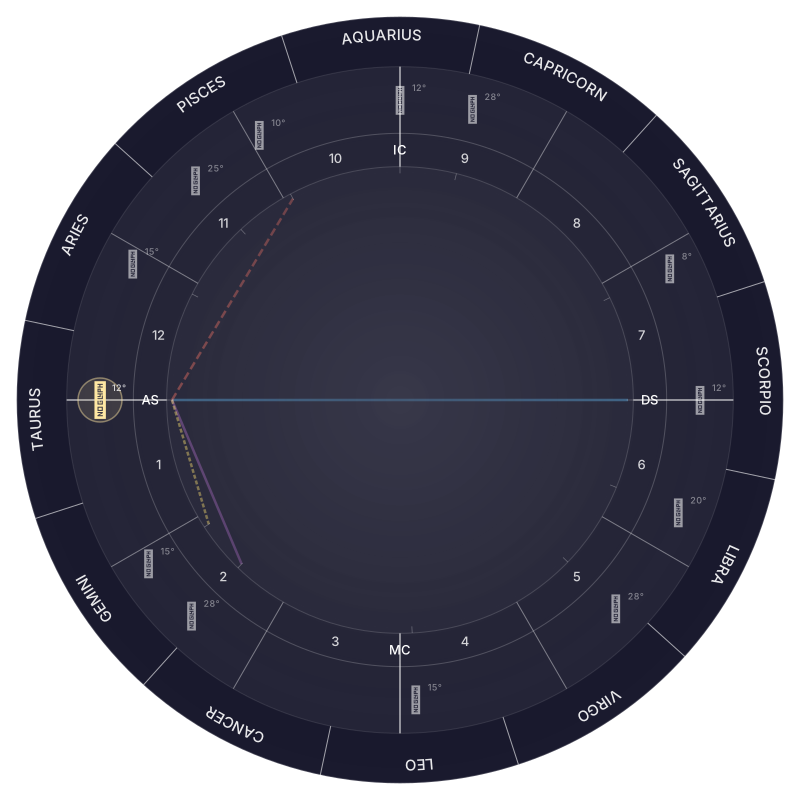
What this calculator reveals
A South Node Calculator identifies the sign—and with enough data, the degree and house—of your familiar lunar node. That point symbolizes the toolkit you already know how to use. It can feel like muscle memory: socially rewarded skills, inherited roles, or coping strategies that once made perfect sense.
Because this placement sits opposite the north node, calculating one always implies the other. We still ship a dedicated page for each keyword so searchers landing on either phrase get a complete explanation without bouncing. The two URLs cross-link so both poles stay visible.
Volume for these queries is often lower than growth-node searches, which can make this a realistic short-term target. Lower volume does not mean thin content: readers who arrive here usually want nuance about release, habit, and gifts—not a single scare-word about “karma.”
How to work with the familiar pole
After the calculator returns your placement, list three ways that sign’s habits already show up helpfully in your life. Then list three ways the same habits create stagnation. That simple inventory prevents demonizing competence.
House context matters. A public-house placement may describe familiarity with visibility, while a private-house placement may describe expertise in caregiving or inner processing. Pull the house from a full birth chart when birth time is known.
Practice “borrow, don’t camp.” Use familiar skills as fuel for growth-edge experiments. For example, analytical habits can support creative risks by providing structure—without turning every day into over-analysis.
Meaning without fatalism
Stories about this pole sometimes get framed as past-life leftovers that must be abandoned. A healthier modern framing treats them as default software. You can keep useful modules and uninstall the malware of compulsion. Astrology becomes a language for awareness rather than a verdict.
During heavy transits—especially Saturn contacts to the nodal axis—default behaviors may spike because stress pushes people toward what they know. Noticing the spike is useful data. Pair node study with saturn return timing if you are in a maturation window.
Monthly charts can also highlight when emotional weather makes defaults louder. A lunar return that activates your nodal houses may coincide with weeks where old roles feel sticky. Notes beat superstition.
Misconceptions worth retiring
Myth: you should never use traits tied to this pole. Reality: refusing your gifts can be as unbalanced as clinging to them. The goal is orientation toward growth without self-erasure.
Myth: the placement equals trauma. Sometimes it simply equals ease. Ease becomes a problem only when it blocks necessary difficulty.
Myth: sign memes are enough. Two people with the same sign here can live entirely different stories once houses, aspects, and culture enter. Keep the calculator’s precision and the chart’s complexity together.
Always link the axis
From this page, the most important internal link is the companion growth-node tool. Read them as a pair every time. Then zoom out to the natal chart for aspects and houses, and visit timing tools when you want to know which seasons amplify the axis.
Secondary phrases such as south node and south node astrology belong on this URL together. Merging those intents here follows the one-page, multiple-keyword strategy and avoids duplicate articles competing for the same readers.
Practical exercises for awareness
Try a two-week observation practice: each evening, note one moment when you defaulted to a familiar strategy and one moment when you experimented toward the stretch. Keep the notes short—three sentences maximum—so the habit survives busy weeks. Over time, patterns become easier to spot than abstractions do.
If relationships repeatedly cast you in the same competent role, name that role aloud. Ask whether the role still fits the chapter you are in. Competence can become a cage when other people expect it more than you want to offer it. Symbolic language is useful here because it names “I can do this, but I do not have to live only here.”
During stressful lunar months, familiar habits often intensify. Compare your notes with monthly emotional weather when you use that timing tool. If several months in a row show the same sticky default, consider whether a larger transit—such as Saturn pressing a sensitive point—is amplifying the pattern. Timing context keeps self-critique from becoming self-blame.
Teachers and writers can use examples carefully. Avoid telling students their familiar pole is a past-life sentence. Prefer developmental coaching language: what is easy, what is overused, what complementary skill would unlock the axis. That framing travels well across cultures and belief systems while still respecting the symbol.
Turning a placement into a weekly practice
Once you know the sign and house, pick one competence to keep and one compulsion to interrupt. For example, keep the craft of careful planning while interrupting the habit of pre-rejecting invitations that would stretch you. Small, named experiments beat vague vows to “stop being like that.”
Track how other people recruit you into the familiar role. Family, teams, and partners often prefer the version of you that is predictable and useful to them. Declining a recruitment is data, not cruelty—especially when you offer an alternative way you can still contribute.
If birth time is solid, sketch which house topics feel over-rehearsed: visibility, caregiving, money talk, crisis management. Then choose one under-rehearsed house topic from the opposite end of the axis and give it fifteen minutes on your calendar this week. Repetition teaches the nervous system that stretch is survivable.
When you share findings with a study partner, describe scenes rather than labels: “I organized everyone again and skipped the creative ask.” Scene-based notes keep symbolism tethered to behavior you can change.
Revisit this page after major life changes—new job, move, parenthood—because the same placement can express through new channels. Update your inventory instead of treating last year’s notes as permanent destiny.
Frequently asked questions
What is my South Node?
It is the lunar node sitting opposite your growth point. In south node astrology, that placement is often linked with familiar strengths, old habits, comfort zones, or patterns you may be learning to release or use more consciously.
How do I find this lunar node?
Use a South Node Calculator or a twin tool that shows both ends of the axis. Because the nodes are always opposite, once you know the growth sign and degree, the familiar pole is the opposite sign at the same degree.
What house holds this placement?
The house is opposite your growth-house placement, but you need an accurate birth time and birthplace to calculate houses reliably. Without birth time, the sign is usually easier to estimate than the house.
What does this point mean in astrology?
It represents patterns that feel familiar, automatic, or overdeveloped. It can describe natural gifts, but also habits that may keep you repeating the same story unless you balance them with stretching toward the opposite end of the axis.
How does it differ from the growth node?
Your growth point aims toward new development, while this placement points toward familiar patterns and default responses. They work together as one axis in the birth chart, so the goal is not to reject comfort skills, but to balance them with stretch.
Related calculators
Continue with tools that pair well with south node calculator.
- north nodeLocate your north node and explore growth themes without destiny hype.
- birth chartMap your free birth chart and natal chart from birth date, time, and place.
- lunar returnCast a monthly Moon map when the Moon returns to its natal place.
- saturn returnFind your saturn return dates and see when your next maturation window begins.