Core calculators
Lunar Return Calculator
Cast your monthly Moon map with our Lunar Return Calculator. See how the Moon’s return to its natal place colors the coming weeks.
Free calculator
Lunar Return Calculator
Enter your birth details to cast your next lunar return chart from the Moon's position at birth.
What this calculator is for
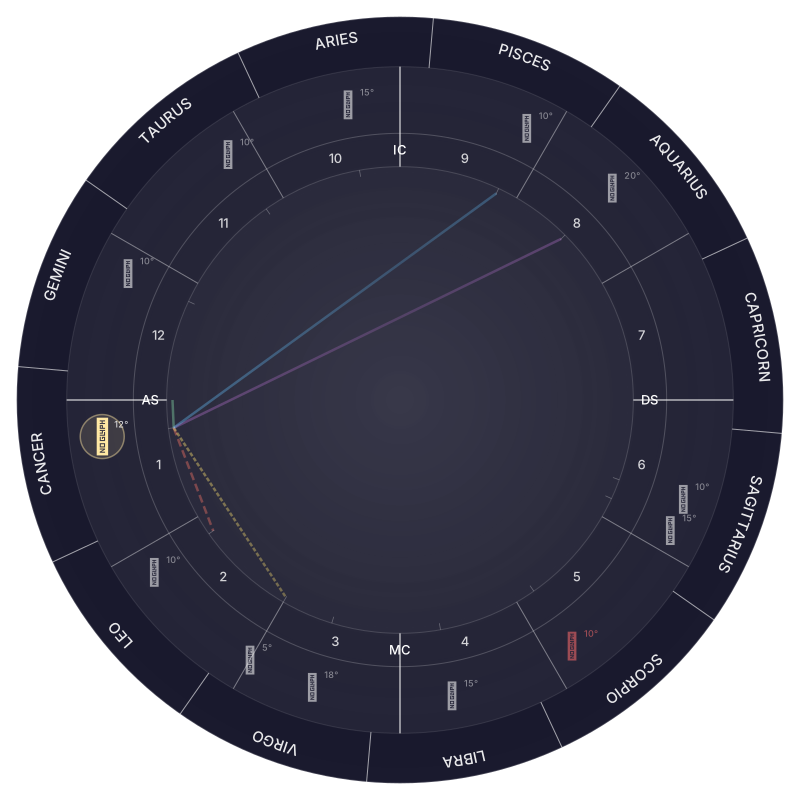
A Lunar Return Calculator finds the next—or current—moment when the traveling Moon hits the same zodiac degree as your natal Moon, then builds a temporary sky map for that instant. Astrologers call that map a lunar return chart. Unlike a yearly solar figure, this rhythm is monthly, which makes it useful for shorter emotional weather, home life shifts, and day-to-day priorities.
Searchers often type both “lunar return” and the chart phrasing as one intent. Those phrases describe one concept, so this page covers both instead of splitting nearly identical intents across two thin URLs. When other pages on the site mention monthly Moon cycles in passing, they should eventually point here.
The tool is intentionally paired with birth chart context. Without knowing your natal Moon degree, a monthly return has nothing stable to return to. Once that degree is known, each month’s map becomes a rotating commentary on mood, nesting instincts, and the people who occupy your inner circle.
How to use a monthly Moon map once calculated
Enter accurate birth data so natal Moon longitude is correct. Then choose the month you care about and the location for the chart. The calculator will output a date and time for the exact hit plus a chart wheel for that moment. Save consecutive months if you want to compare changing house emphases.
Start interpretation with the Moon’s condition in the temporary chart: sign, house, and major aspects. A fire-sign month often feels more initiation-minded than a water-sign month, all else equal. House placement of the return Moon tips you toward the life area where feelings need tending that month.
Next, notice which natal points the temporary Ascendant or Midheaven activate if you work with angles. Many readers also scan where the monthly map places Saturn, Venus, and Mercury for tone around duty, affection, and logistics. Keep notes brief—lunar symbolism works well as a practical checklist rather than an epic essay every twenty-eight days.
What the result means
A monthly return does not overwrite your natal chart. It is a temporary overlay describing the emotional climate of roughly one lunar month. Themes that already exist in the natal figure may feel louder or quieter depending on how the overlay activates them.
Think of the natal moon sign as your emotional dialect and the lunar month chart as this month’s conversation topic. You still speak the same dialect, but the room, company, and agenda change. That framing keeps monthly forecasting from turning into identity whiplash.
Because the Moon rules appetite, sleep, family dynamics, and private security, these charts often describe where care is required. They are less about epic career pronouncements and more about whether you feel fed, rested, and emotionally solvent while larger transits do slower work.
Common mistakes with monthly returns
Casting from a wrong birth time is the fastest way to misplace the natal Moon degree. Even thirty minutes can nudge the Moon into a different degree band and alter timing. Verify records before building a year of charts.
Another mistake is treating every monthly map like a crisis alert. Many months are mild. Calm charts are data: they may describe maintenance, recovery, or quiet productivity. Not every wheel needs dramatic language.
Finally, avoid reading the month in total isolation from slower cycles. A hard Saturn transit can make several consecutive months feel heavier. Context from a saturn return window or other long-term factors keeps monthly charts honest.
Related tools worth pairing
If you only know your sun sign so far, begin with a natal wheel so Moon and angles are visible—the same foundation you would use for a solar-year chart when that tool exists. If you simply need the natal Moon glyph quickly, the moon-sign tool is a lighter entry. For longer structural chapters, compare your monthly notes against maturity timing and north node growth themes rather than expecting the Moon alone to explain multi-year arcs.
This page intentionally merges short-cycle and chart-language intents into one durable destination. That matches the one-page, multiple-keyword strategy in our build guide and prevents ranking signals from splitting across near-duplicate URLs.
A realistic monthly review habit
On the day of the exact hit—or the first morning after—write three lines: what needs more care, what can wait, and who is in your inner circle this month. Those three lines are often more useful than a long interpretive essay you will never reread.
Keep a folder of consecutive charts. After three or four months, look for house themes that repeat. Repetition is a better guide than any single dramatic aspect. If the fourth house appears often, domestic logistics deserve budget and calendar space whether or not the month feels “exciting.”
When travel changes your location, decide whether to cast for home or for where you will sleep most nights that month. Consistency matters more than perfection; pick a rule and stick with it so comparisons stay honest.
If sleep, appetite, or family tension spikes, circle back to the temporary Moon’s house and aspects before blaming yourself for a character flaw. Sometimes the map is simply naming a care deficit.
Share monthly notes with a study partner using scene language—“more nesting, less networking”—not jargon dumps. Clear scenes keep the technique useful outside professional circles.
Frequently asked questions
What is a lunar return chart?
It is an astrology chart cast for the moment the Moon returns to the exact position it occupied in your birth chart. Readers usually treat it as a short-term map for emotional themes, daily rhythms, and the tone of the coming lunar month.
How do I calculate this monthly map?
Use a Lunar Return Calculator with your birth date, birth time, birthplace, and the month or date you want to check. The tool finds your natal Moon degree and then calculates the next moment the traveling Moon returns to that same position.
What does this cycle mean in astrology?
It highlights the emotional weather of the next month. Readers often look at the Moon's house, the temporary Ascendant, and close aspects to understand which life areas may feel more active or emotionally important.
How often does this cycle happen?
It happens roughly every 27.3 days, so most people have about thirteen of these charts each year. That is why the technique is more month-by-month than yearly.
How does it differ from a solar return?
This cycle happens when the Moon returns to its natal position and is usually read for the coming month. A solar return happens when the Sun returns to its natal position, around your birthday, and is usually read for the year ahead.
Related calculators
Continue with tools that pair well with lunar return calculator.
- birth chartMap your free birth chart and natal chart from birth date, time, and place.
- moon signFind your lunar placement and emotional temperament from birth details.
- saturn returnFind your saturn return dates and see when your next maturation window begins.
- north nodeLocate your north node and explore growth themes without destiny hype.