Core calculators
Moon Sign Calculator
Find your lunar placement with our Moon Sign Calculator. Learn how natal Moon temperament shapes needs, comfort, and emotional pace.
Free calculator
Moon Sign Calculator
Enter your birth date, time, and place to find your Moon sign and degree.
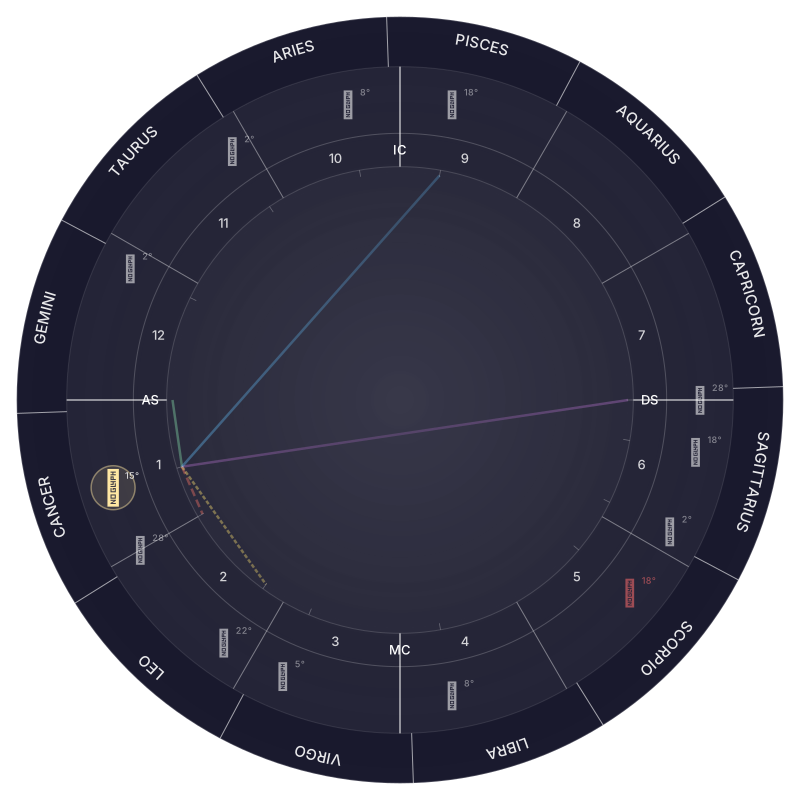
What this calculator finds
A Moon Sign Calculator answers the question people type almost word for word: what is my moon sign? It locates the zodiac sign the Moon occupied when you were born. That placement is part of your natal chart, but many readers want this single answer before they study a full wheel.
The Moon moves quickly compared with the Sun. That speed is why siblings born days apart—or twins born hours apart near a border—can land in different lunar signs. It is also why “around morning” is not always precise enough if the Moon changed signs that day.
Compared with broad natal-chart searches, lunar-sign queries are more specific yet still competitive. This page aims for clear utility: compute the placement, explain emotional tone in practical language, and route curious readers toward related tools rather than trapping them on a one-line result page.
How to use the tool
Provide birth date first. If you know birth time, enter it next—hours and minutes if possible. Add birth city so timezone history can be applied correctly. When the calculator launches, the primary output is your lunar sign plus the Moon’s approximate degree when available.
If your time is unknown, the tool may show two candidate signs for days when the Moon changed signs. Treat those results as unfinished until you can verify time. Asking relatives for hospital memories or requesting a birth record remains worth the effort.
Once you have a sign, read it as emotional habit rather than destiny. Ask: what restores me after stress? What kind of home rhythm do I need? Where do I get defensive too quickly? Those questions turn a glyph into usable self-knowledge.
What the placement means
Element and modality give a first sketch. Fire moons often need movement and honest warmth. Earth moons seek tangible security and steady care. Air moons process feelings through words and perspective. Water moons track undercurrents and may need deliberate emotional privacy.
Cardinal moons initiate, fixed moons stabilize, mutable moons adapt. Combining element and modality explains why two water moons can still feel different—Cancer’s protective initiation is not Scorpio’s fixed intensity or Pisces’ permeable adaptability.
House placement of the natal Moon, visible in a full birth chart, shows where emotional themes play out: career stages, partnerships, creative life, or daily routines. Sign describes style; house describes stage. Degrees and aspects refine that story further.
Misconceptions and search myths
Social media sometimes ranks lunar placements like personality badges. Real life is more mixed. Someone with a soft lunar sign and hard Mars aspects will not behave like a textbook meme. Use the sign as a starting lens, not a cage.
Another myth: your natal Moon changes with today’s Moon. It does not. Transiting Moon describes today’s weather; your natal moon sign describes your baseline. Monthly lunar return chart maps track when the sky Moon revisits your natal degree without changing that natal sign.
People also assume sun and Moon must “match” to be happy. They do not. Productive tension between solar goals and lunar needs is common. Integration beats forcing a single-element identity.
Where to go next
After you know your moon sign, compare it with your Sun sign and rising sign in a full natal wheel for the classic “big three.” Pair lunar knowledge with Mercury Sign insights when you want to understand how feeling becomes speech. Use a monthly lunar map when you care about this month’s emotional agenda, and glance at your north node when habits and growth goals tug in different directions.
We keep the secondary phrases on this single page because they express one search intent. Building two almost identical pages would split authority. Internal links from thematically related calculators should point here when lunar placement is the natural next click.
Everyday ways to apply a lunar placement
Design a recovery ritual that matches element needs: fire may need movement after conflict, earth may need a tangible tidy-up or meal, air may need a clarifying conversation or walk with a friend, water may need privacy and soft lighting before re-entering social noise.
Notice conflict styles under stress. Some lunar temperaments go quiet; others get chatty; others organize frantically. Naming your default helps partners and coworkers hear “I am overwhelmed” instead of inventing a personal slight.
Schedule care before you are empty. Waiting until collapse often punishes the very temperament that was asking for earlier attention. Put one restorative block on the calendar during busy weeks as if it were any other non-negotiable appointment.
If birth time remains uncertain, keep two candidate signs in play and gather behavioral evidence rather than forcing a dramatic identity switch every time a meme is funnier for one option.
Revisit this page when seasons of caregiving, grief, or celebration change what “home” means. The natal glyph stays fixed, but the life containers that hold it do not.
Frequently asked questions
What is my moon sign?
It is the zodiac sign the Moon was in when you were born. In astrology, it is usually connected with emotions, instinctive reactions, comfort needs, and your private inner world.
How do I find this lunar placement?
The easiest way is to use a Moon Sign Calculator and enter your birth date, birth time, and birth location. A full natal tool will also show this placement along with your Sun, rising sign, planets, and houses.
Can I calculate it by date of birth alone?
You can often estimate from your birth date, but the result may be wrong if the Moon changed signs that day. For a precise answer to "what is my moon sign," use your date of birth plus your birth time and location.
Do I need my birth time?
Birth time is strongly recommended. The Moon changes signs about every two and a half days, so if you were born near a sign change, even a few hours can affect the result.
How does it differ from sun and rising?
Your sun placement describes core identity and life force. Your lunar placement describes emotional nature and inner needs. Your rising sign, or Ascendant, describes the zodiac sign rising on the eastern horizon at birth and sets up the houses in your chart.
Related calculators
Continue with tools that pair well with moon sign calculator.
- birth chartMap your free birth chart and natal chart from birth date, time, and place.
- Mercury SignCalculate your Mercury Sign to see how Mercury shapes communication.
- lunar return chartCast a monthly Moon map when the Moon returns to its natal place.
- north nodeLocate your north node and explore growth themes without destiny hype.