Core calculators
Saturn Return Calculator
Estimate your Saturn return dates with our Saturn Return Calculator. Learn what the transit asks for and how to prepare practically.
Free calculator
Saturn Return Calculator
Enter your birth details and which Saturn return to chart. Results open after we find the return timing and cast the chart.
What this calculator estimates
A Saturn Return Calculator answers a timing question: when will Saturn in the sky return to the zodiac degree it held when you were born? That transit is called a saturn return. Astrologers treat it as a structural checkpoint rather than a vague personality label. The calculator compares your natal Saturn longitude with Saturn’s ephemeris path and lists one or more saturn return dates when the alignment is exact.
Saturn takes roughly twenty-nine and a half years to circle the zodiac. That means most adults meet a first checkpoint near the late twenties, a second near the late fifties, and—if health allows—a third near the late eighties. Because Saturn stations retrograde every year, a single window can produce two or three exact dates within a span of months.
People search this tool when life already feels heavier: career pivots, relationship sorting, accountability themes, or a quiet urge to grow up in a domain they previously avoided. The page is designed as a realistic short-term SEO target because the audience is specific and motivated, while still teaching enough context that the dates mean something once you have them.
How to read the dates
When the tool is live, enter your birth data to locate natal Saturn. The output should list approaching or recent exact conjunction dates and may note whether Saturn is direct or retrograde on those days. Mark those dates on a calendar, then widen your attention to several months on either side. The story of a return is rarely a single afternoon.
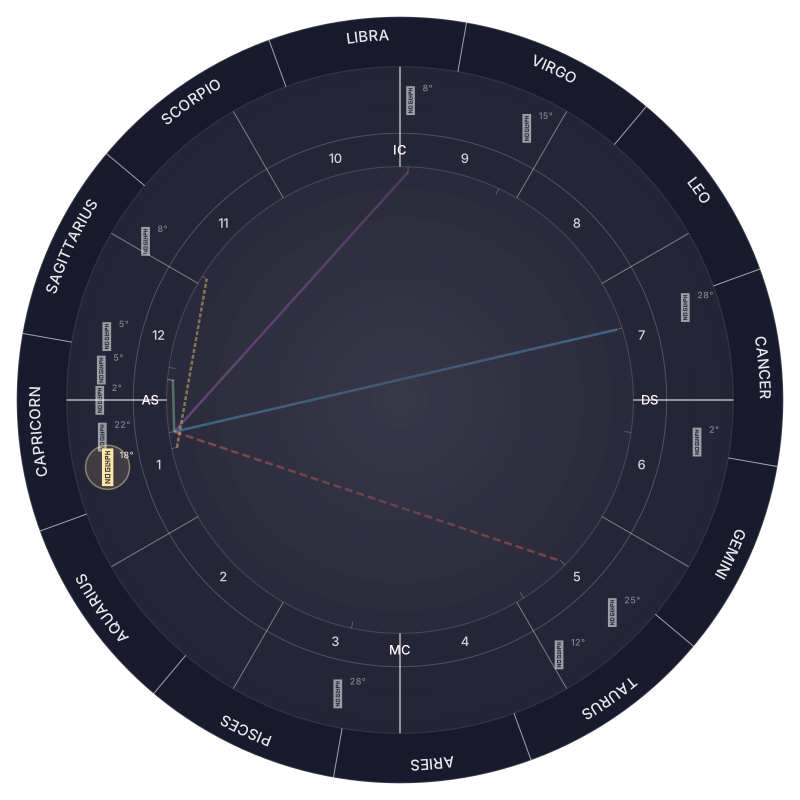
Next, look at which natal house Saturn occupies in your birth chart. That house names the life area where maturation pressure concentrates—work and status for the tenth, partnerships for the seventh, foundations for the fourth, and so on. If you do not yet have a natal wheel, start there so house context is not guesswork.
Aspects from other natal planets to Saturn color the emotional weather. A Saturn tightly square natal Moon can feel more personally vulnerable than a Saturn trine natal Sun. None of those aspects cancel the transit; they describe the texture of the chapter.
What the transit tends to ask for
Saturn themes include commitment, boundaries, time, craftsmanship, and consequence. During this chapter, shortcuts tend to stop working. Roles that were provisional ask for a clearer yes or a cleaner no. Skills you have been dabbling in may demand deliberate practice if you want them to support a real livelihood or identity.
That does not mean everyone must marry, quit, or start a business on the exact day. It means the unresolved contracts of earlier adulthood—spoken or unspoken—tend to come up for renegotiation. People who already built sturdy habits often experience the window as a consolidation rather than a collapse.
Track practical markers alongside symbolism. Which responsibilities did you accept that no longer fit? Which delays were actually protective? Which standards need raising? Journaling around the listed dates helps you notice patterns that horoscope memes flatten into doom.
Misconceptions about the transit
Myth one: everyone has a catastrophe at twenty-nine. Reality: distribution of intensity varies. Culture, privilege, natal chart condition, and support systems all mediate the period. Astrology describes weather; it does not write the entire script.
Myth two: if nothing dramatic happened, you somehow missed it. Quiet returns exist. Sometimes the work is internal—completing a degree, paying down debt steadily, ending a chronic people-pleasing pattern—without a public plot twist.
Myth three: only the first window matters. Second checkpoints often revise career legacy, caregiving roles, and authority themes with more life evidence than people had at thirty. Comparing first and second date lists side by side can be clarifying later in life.
Linking Saturn work to other charts
Saturn does not operate in a vacuum. Monthly lunar return charts can show shorter emotional weather during the broader window. Your north node can highlight growth edges that Saturn pressure makes harder to ignore. Outer-planet context such as Uranus Sign describes how you prefer breakthroughs when structures tighten. Keeping those tools connected through internal links helps searchers and readers move from timing to meaning without opening five thin pages that all say the same sentence.
Use secondary language naturally: when you talk about saturn return dates in conversation with friends, you are already describing what this calculator computes. Weave that phrase into headings and body copy here rather than inventing a separate date-only landing page.
A practical checklist for the season
Before the first exact hit, audit three contracts: work role, closest relationship agreements, and money reality. Write what is provisional versus committed. Clarity on paper reduces panic when pressure rises.
During multi-pass years, treat each exact date as a check-in rather than a verdict. Retrograde revisits often bring the same theme with new evidence. Update the audit instead of rewriting your entire personality between hits.
Build one craft standard you can measure: publish weekly, repay a fixed amount, sleep by a consistent hour, or finish a certification module. Measurable standards give Saturn something constructive to lean on.
Ask for competent help early—therapy, legal advice, career coaching, medical care—when the chapter touches those domains. Accountability structures are not weakness; they are adult infrastructure.
After the final pass, schedule a quiet review month. Note what you ended, what you strengthened, and which standards you intend to keep. Closure turns a transit season into transferable life skill.
Frequently asked questions
When is my Saturn return?
It happens when traveling Saturn comes back to the same zodiac position it held in your birth chart. For most people, the first window arrives around ages 29 to 30, the second around 58 to 60, and the third around 87 to 88.
How do I calculate it?
Use a Saturn Return Calculator with your birth date, birth time if known, and birthplace. The tool finds your natal Saturn position, then checks when Saturn returns to that same degree; some tools also show multiple exact hits if retrograde motion creates more than one pass.
When does the window start and end?
The exact hit is the date Saturn conjoins your natal Saturn degree. The broader start and end depends on the orb a calculator uses, but many people track the whole period when Saturn is moving close to that natal degree, including any direct and retrograde passes.
How long does it last?
The exact hit can be a single day, but the full process usually unfolds over months and can feel active for a couple of years while Saturn moves through the same sign or repeatedly approaches the natal degree. A calculator is best for narrowing your personal start, peak, and end dates.
What house is involved?
House placement depends on the house system and the chart being used. Natal Saturn's house shows the lifelong area Saturn is tied to, while a return chart may place Saturn in a house based on where you are at the time of the transit. Exact birth time and location are needed for reliable house placement.
Related calculators
Continue with tools that pair well with saturn return calculator.
- birth chartMap your free birth chart and natal chart from birth date, time, and place.
- lunar returnCast a monthly Moon map when the Moon returns to its natal place.
- Uranus SignFind your Uranus Sign and how Uranus marks breakaway generation themes.
- north nodeLocate your north node and explore growth themes without destiny hype.